
Touch: The Body’s Oldest Form of Communication
Long before we had words, we had touch. From a parent soothing a child to a comforting hand on a friend’s shoulder, touch communicates safety, empathy, and care.
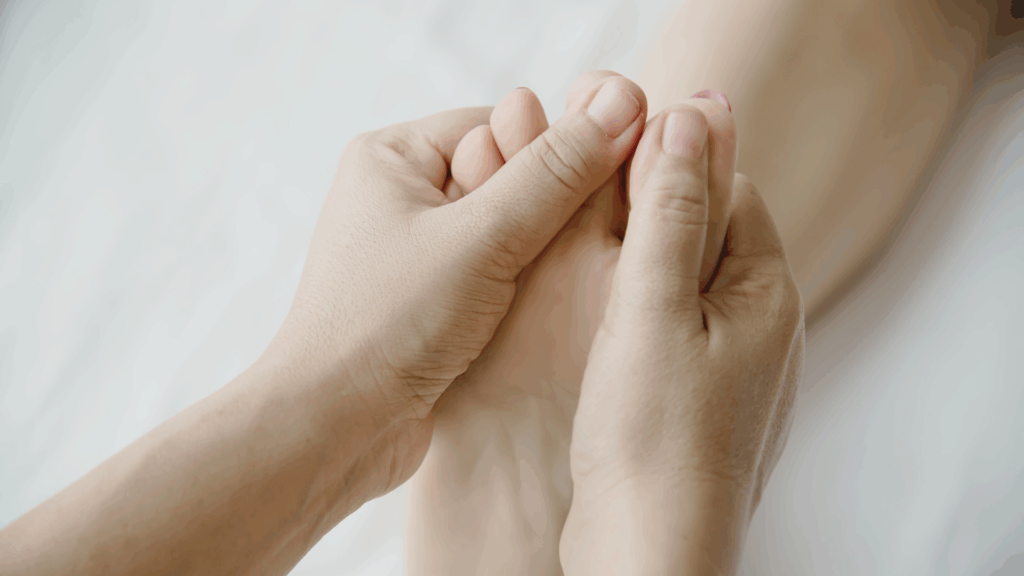
In a reflexology session, that same language of touch becomes a form of therapy. Gentle, intentional pressure on the feet does more than relax muscles — it sends complex signals through the nervous system, influencing the body’s chemistry and emotional state.
The Physiology of Touch
When we experience nurturing touch, the body activates specific nerve fibres known as C-tactile afferents. These fibres are designed not for pain or pressure detection, but for pleasure and connection. They send messages to the insula, a part of the brain that processes emotion and interoception — your internal sense of how your body feels.
This type of touch triggers a cascade of responses:
- Oxytocin (the “connection hormone”) increases, promoting trust and calm.
- Cortisol (the stress hormone) decreases.
- Heart rate and blood pressure drop as the body moves into parasympathetic mode — its rest, repair, and healing state.
In other words, touch doesn’t just feel good; it rewires the body’s stress response at a biological level.
Reflexology and the Nervous System
Reflexology uses touch with purpose and precision. By stimulating reflex points on the feet that correspond to organs and glands, reflexology influences the autonomic nervous system — the body’s command centre for involuntary processes like heart rate, digestion, and hormonal regulation.
When I work with clients, I observe that as the session progresses, breathing slows, muscles soften, and the entire system begins to reset. Many fall into a deeply restorative state — not asleep, but suspended between awareness and rest, where true healing begins.
This state is known as the relaxation response, first studied by Dr. Herbert Benson at Harvard. It’s a physiological shift that reduces inflammation, improves immune function, and promotes emotional equilibrium.
Beyond Relaxation: The Measurable Benefits of Touch
Scientific research now supports what holistic practitioners have known for decades — that touch has measurable effects on health and wellbeing.
- A 2019 study in Frontiers in Psychology found that therapeutic touch reduces pain perception and increases resilience to stress.
- Research published in Complementary Therapies in Clinical Practice showed that reflexology lowers anxiety and improves sleep quality in patients with chronic conditions.
- Touch has been shown to boost natural killer cell activity, enhancing immune function and recovery from illness.
- In mental health settings, nurturing touch reduces loneliness and promotes emotional regulation.
Reflexology combines these effects through structured, mindful contact that communicates safety, trust, and care to the nervous system — helping the body shift from “survival” to “balance.”
The Emotional Science of Touch
Touch also has profound emotional significance. When you receive caring touch, the brain releases serotonin and dopamine, the same neurotransmitters linked to happiness and reward.
These chemicals not only lift mood but also help regulate sleep, digestion, and hormonal cycles — explaining why clients often report feeling calmer, more grounded, and emotionally lighter after reflexology.
Therapeutic touch can even help process emotional experiences stored in the body. Many people hold tension or trauma physically, and reflexology provides a safe, gentle way for that tension to release through physical and emotional channels.
My Approach to Touch in Reflexology
When I work with clients, my aim is always to create a safe, nurturing space where touch becomes communication — a dialogue between the practitioner and the body. Every movement is intentional, designed to support the client’s unique physical and emotional needs.
I combine rhythmic flow with subtle variations in pressure to help the nervous system recognise safety and stillness. Over time, clients often describe a deeper awareness of their body — as if they’ve reconnected with parts of themselves they’d forgotten.
Touch, when delivered with compassion and skill, helps people not only relax but heal.
Why Holistic Therapies Work So Deeply
Holistic therapies like reflexology don’t treat symptoms in isolation. They work with the body as a whole system — physical, emotional, and energetic.
By stimulating reflex points, calming the nervous system, and promoting balance in the endocrine and circulatory systems, reflexology supports the body’s natural self-healing mechanisms. The scientific basis of touch gives this practice credibility, while its intuitive nature gives it soul.
This union of science and sensitivity is what makes holistic therapies such powerful tools for wellbeing — they reach the parts of us that medicine can measure and the parts it can’t.
Final Thoughts
Touch is more than comfort — it’s communication, chemistry, and care woven into one. Reflexology embodies this beautifully: a therapy grounded in both science and compassion.
Through intentional touch, it speaks directly to the nervous system, reminding the body how to rest, regulate, and restore.
That’s why reflexology — and holistic therapies like it — work far beyond relaxation. They help us reconnect with our natural capacity for healing, reminding us that balance isn’t something we create — it’s something we remember.